Living
Breast Cancer: Know the Signs, Understand Your Risk and Seek Care Early

By
Breast cancer remains one of the major health challenges facing women, but early detection and timely treatment can significantly improve outcomes. Yet in Zimbabwe, many patients continue to present when the disease is already advanced, when treatment becomes more complex and the chances of cure may be reduced.
To better understand what people should know about breast cancer, Michael Gwarisa spoke to oncologist Dr Anna Nyakabau, who discusses the warning signs that should never be ignored, risk factors, screening, diagnosis, treatment options available in Zimbabwe, and some of the persistent myths surrounding the disease.
Breast cancer does not always cause pain, so a breast change that is new or unusual should not be ignored simply because it does not hurt.
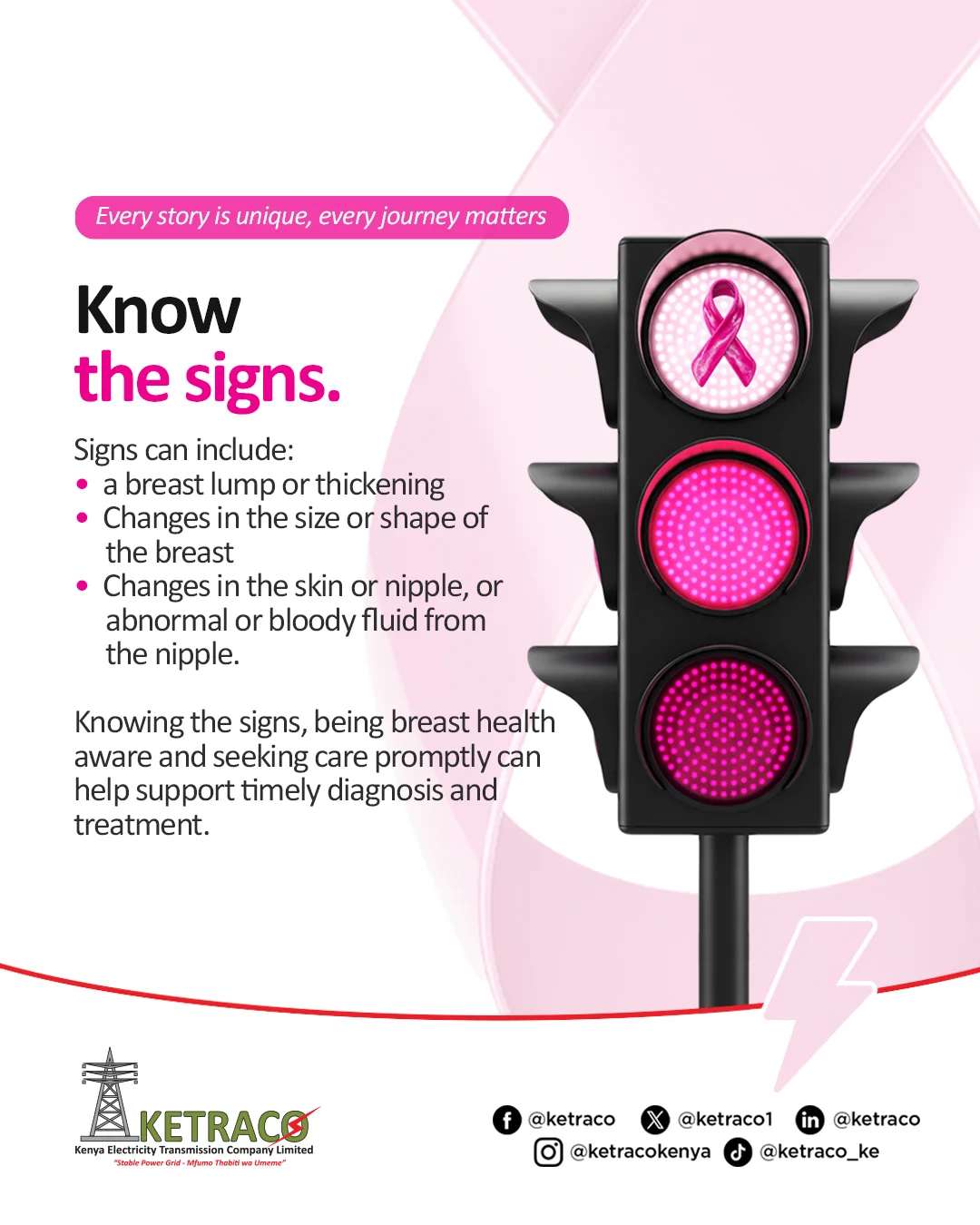
People should look out for a new lump or thickening in the breast or armpit, particularly if it feels hard, fixed or different from the surrounding breast tissue. A change in the size or shape of one breast that was not there before should also be assessed.
Changes to the skin can include dimpling, puckering, thickening, redness or skin that takes on the appearance of an orange peel. Changes involving the nipple, such as the nipple suddenly turning inward, becoming distorted, or developing a persistent rash or sore, should also be checked.
Other warning signs include unusual nipple discharge, particularly spontaneous discharge that is bloody or comes from only one breast, as well as persistent swelling or discomfort involving part or all of the breast.
A lump or swelling in the armpit can sometimes be the first noticeable sign.
Men should also be aware of breast changes. Although breast cancer is much less common in men, a new lump or enlargement of the breast, particularly behind or around the nipple, should be assessed.
The key message is that if you notice a new breast change that persists, gets worse or is different from what is normal for you, seek medical attention.
Most breast lumps and changes are not cancer, so finding a lump does not automatically mean that someone has cancer. However, the only way to know for sure is to have the change properly assessed.
Breast cancer risk is the result of a complex interaction between factors that cannot be changed and those that can.
Some of the most important non-modifiable risk factors are being a woman and getting older. Most breast cancers are diagnosed in women aged 50 or older, while only about one percent of breast cancers occur in males.
Inherited genetic mutations, including changes in genes such as BRCA1, BRCA2 and TP53, can significantly increase the risk of breast cancer.
Reproductive history also plays a role. Starting menstruation at an early age and going through menopause later have been associated with increased risk because of longer exposure to oestrogen on breast tissue.
Family history is another important factor, particularly having a first-degree relative, such as a mother, sister or daughter, who has had breast cancer, especially if that relative was diagnosed at a young age.
Women with dense breast tissue also have an increased risk, while dense tissue can make breast cancer more difficult to visualise during mammography. A personal history of breast cancer or certain non-cancerous breast diseases can also increase risk. Previous radiation therapy to the chest before the age of 30 is another recognised risk factor.
There are also modifiable factors that can meaningfully lower risk. Physical inactivity is associated with increased risk, while being overweight or having obesity after menopause can also increase the risk.
Alcohol consumption is another factor, with risk increasing as the amount of alcohol consumed increases. Long-term use of combined hormone replacement therapy can also raise breast cancer risk.
Other factors include smoking and some reproductive factors, such as never having a full-term pregnancy, not breastfeeding, or having a first pregnancy after the age of 30.
For women who are at high risk because of genetics or family history, additional medical interventions may be considered. Risk-reducing medicines such as tamoxifen or raloxifene can reduce breast cancer risk in some high-risk women. Preventive mastectomy or removal of the ovaries may also be considered in women with certain high-risk genetic mutations.
Lifestyle changes, including regular exercise, maintaining a healthy weight and avoiding alcohol and smoking, can also reduce risk.
There are also risk-assessment models and algorithms, including the Gail model and the Tyrer-Cuzick model, which can be used to estimate an individual’s risk of developing breast cancer.
Breast cancer screening is intended to detect cancer before symptoms develop, when treatment is generally more effective.
Women are encouraged to practise breast self-awareness by becoming familiar with the normal appearance and feel of their breasts and promptly reporting unusual changes. Formal monthly breast self-examination has not been shown to reduce breast cancer mortality, but knowing what is normal for one’s breasts remains important.
Clinical breast examination involves assessment by a trained healthcare professional. It can be useful when evaluating symptoms and may form part of early-detection programmes, particularly in settings where mammography is not readily accessible. However, it is not a direct substitute for mammography.
For women at average risk, screening recommendations differ somewhat between international organisations. The United States Preventive Services Task Force recommends mammography every two years for women aged 40 to 74, while the American Cancer Society recommends offering screening from age 40, with annual screening between 45 and 54 and annual or biennial screening from age 55.
In Zimbabwe, mammography is used as a screening tool for women above the age of 40 who have relatively less dense breasts. Mammography is less sensitive in detecting breast cancer in women with denser breasts, which is one reason it is not routinely used as a screening tool for women below the age of 40.
Women with strong family histories, inherited genetic predispositions or previous high-risk radiation to the chest may require earlier and more intensive screening, sometimes including breast magnetic resonance imaging.
However, screening decisions in Zimbabwe must also take into account local resources, accessibility and the capacity to investigate abnormal findings and provide treatment.
Importantly, anyone who develops a suspicious breast symptom should seek medical assessment immediately, regardless of their age or whether they are due for routine screening.
Late presentation is usually not caused by a single factor. Several barriers can prevent someone from recognising a problem, reaching healthcare, obtaining a diagnosis and starting treatment quickly.
One of the barriers is lack of awareness. A painless breast lump, for example, may be ignored, particularly when there are no other symptoms.
Fear and stigma also play an important role. Some people fear a cancer diagnosis, death, surgery or chemotherapy, while others may be worried about being judged by their families or communities.
Some patients wait for the problem to become serious. Others may initially try home remedies, traditional or faith-based treatment, or simply hope that the lump will disappear.
Financial and transport difficulties can also make early care difficult. Patients may have to pay for transport, consultations, scans and biopsies, while also losing income because of time spent travelling to health facilities.
Distance from services is another challenge because specialist breast and cancer services are concentrated in larger centres, requiring some patients to travel long distances.
There can also be delays within the health system, with patients sometimes requiring several referrals before they can access imaging, biopsy, pathology and specialist treatment.
Other barriers include limited access to affordable breast examinations, ultrasound, mammography and biopsy services, delays in referral and pathology results, limited specialist cancer services outside major cities, and the cost of treatment and repeated hospital visits.
There is also a need to improve public understanding that breast cancer can be treated successfully, particularly when it is detected early.
What can make a difference is making early action easier: teaching communities about breast cancer warning signs, encouraging people to report new lumps or persistent breast changes early, strengthening breast services at primary and district level, speeding up referral, biopsy and pathology, and making diagnosis and treatment more affordable.
A breast lump should not be ignored simply because it is painless.
When someone suspects that they may have breast cancer, the first thing is to stay calm and seek medical attention. There is a clearly defined pathway from diagnosis to treatment that a healthcare practitioner will guide the patient through.
The first step is to visit a healthcare practitioner, who will take a medical history and conduct a physical examination, including a breast examination. The doctor will assess for signs such as a breast lump, skin changes, nipple changes and lumps in the armpit.
If breast cancer is suspected, the patient will be referred for imaging. A diagnostic mammogram is a detailed X-ray of the breast used to localise suspicious findings that may indicate malignancy.
If a suspicious lesion is identified, a biopsy is performed. This involves using a needle to obtain a sample of tissue from the suspicious area. The tissue is then examined under a microscope to establish a definitive diagnosis.
An ultrasound scan of the armpits may also be performed to check for suspicious lymph nodes. If suspicious nodes are identified, a sample may be taken to determine whether cancer has spread to the armpit. In some cases, markers may be placed in suspicious breast lesions or lymph nodes to help with treatment follow-up.
The biopsy is also important because it determines the type of breast cancer. Immunohistochemistry is performed to establish whether the tumour expresses receptors for oestrogen or HER2, or whether it lacks these receptors. This information is important because treatment is personalised according to the type of breast cancer.
A CT scan of the chest, abdomen and pelvis may then be performed to determine whether the cancer remains localised to the breast or has spread to other areas, such as the lungs, liver or bones.
The extent of spread is known as the stage. Stage 1 represents early breast cancer that has not spread beyond the breast, while Stage 4 refers to cancer that has spread to distant organs.
The stage is important in determining treatment. Early-stage breast cancer is generally treated with curative intent, while metastatic breast cancer is treated with palliative intent, focusing on controlling the disease, prolonging survival, relieving symptoms and maintaining quality of life.
Breast cancer treatment is individualised. There is no single treatment approach that is appropriate for every patient.
Doctors consider factors related to the cancer itself, including the stage of the disease, the grade of the tumour and molecular markers, particularly the oestrogen receptor, progesterone receptor and HER2 status.
Patient-related factors are equally important. These include the person’s age, general health, menopausal status, other medical conditions and personal preferences.
Treatment often involves a combination of approaches.
Surgery may involve removing only the cancerous part of the breast or the entire breast.
Chemotherapy uses medicines to destroy cancer cells and may be given before surgery to shrink a tumour or after surgery to reduce the risk of recurrence.
Radiotherapy uses high-energy radiation to destroy cancer cells and is commonly given after surgery to reduce the risk of the cancer returning.
Hormone therapy, including medicines such as tamoxifen, is effective for cancers that depend on hormones to grow.
There are also targeted therapies, such as trastuzumab, which act against specific characteristics of cancer cells, particularly in patients whose cancers are HER2-positive.
For patients diagnosed at an early stage, treatment is generally aimed at curing the disease. Where cancer has spread to distant organs, treatment generally focuses on controlling the disease, prolonging survival, relieving symptoms and maintaining quality of life.
In Zimbabwe, the main treatment options, including surgery, chemotherapy, radiotherapy and hormone therapy, are available, although access varies according to the treatment centre and available resources.
One major challenge is access to radiotherapy, with functional services concentrated in Harare. Patients from other parts of the country may have to travel long distances and sometimes find accommodation in Harare for several weeks while receiving treatment. These additional costs can place a significant financial burden on patients and their families and may result in treatment delays or interruptions.
There have, however, been efforts to expand cancer services. New radiotherapy machines are being installed at Mpilo Central Hospital in Bulawayo, with plans to extend cancer treatment services to other provinces. These developments are expected to improve access to radiotherapy and reduce the need for patients to travel long distances.
Some newer targeted therapies can also be sourced locally, but they are often expensive and beyond the reach of many patients. Where medicines are not readily available, they may need to be imported, creating additional costs and potential delays.
As a result, patients may not always be able to access every treatment option recommended for their particular type of cancer. Healthcare providers therefore work with patients to identify the most appropriate and feasible treatment plan, taking into account available resources, the patient’s circumstances and what they can reasonably afford.
Ideally, breast cancer management should be multidisciplinary, with surgeons, oncologists and other healthcare professionals working together, often through multidisciplinary team meetings, to determine the most appropriate treatment.
The goal is to provide treatment that is medically appropriate and accessible while achieving the best possible outcome for every patient.
One of the most concerning misconceptions is that breast cancer is automatically a death sentence.
This perception may have been created by high mortality associated with patients presenting late for formal medical care. It can create unnecessary fear and discourage people from seeking medical attention, perpetuating a cycle of late diagnosis and poor outcomes.
The reality is that many patients with breast cancer, particularly those diagnosed at an early stage, can be treated successfully and potentially cured.
Another misconception is that every breast lump is cancer. Many breast lumps are benign, but it is not possible to reliably distinguish every benign lump from a malignant one without appropriate medical assessment. Suspicious breast changes therefore require medical evaluation.
There is also the belief that breast cancer affects women exclusively. Although uncommon, men can develop breast cancer and should never ignore suspicious breast changes.
Other myths include claims that breast injuries, wearing bras or using ordinary deodorants have been proven to cause breast cancer. There is no convincing scientific evidence supporting these claims.
Another concern is the belief that herbal remedies alone can cure breast cancer. While traditional practices may have cultural significance, herbal preparations have not been demonstrated to replace established cancer treatments.
Delaying effective, evidence-based treatment in favour of unproven remedies can allow a potentially curable cancer to progress.
People should therefore make healthcare decisions based on reliable medical information rather than fear, stigma or misinformation.
Breast cancer is treatable. Breast cancer can be cured. There is hope.
A breast cancer diagnosis is not the end of the road. There is hope beyond diagnosis and there is life beyond breast cancer.
Early detection and timely treatment can save lives. People should not wait for symptoms to worsen. Know your body, attend appropriate screening and seek medical attention if you notice unusual changes.
Encourage family members, friends, colleagues and people in your community to take their breast health seriously.
One life saved is worth every effort. Each of us has a role to play in spreading awareness, promoting early detection and supporting people affected by breast cancer.