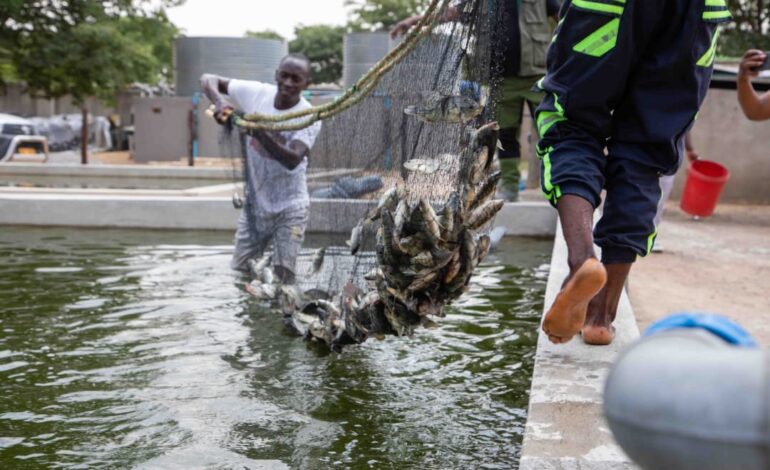
ZIMBABWE has launched national biosecurity and environmental guidelines for small-scale fish farms as the aquaculture sector expands, with active fish farmers increasing from 4 803 to 8 663 in a year. The guidelines — the Manual on Biosecurity for Small-Scale Fish Farmers and the Environmental Guidelines for Small-Scale Fish Farms — launched in Harare on Tuesday aim to prevent disease outbreaks, protect aquatic ecosystems and safeguard investments in fish farming.
Livestock and Fisheries Production Department director Milton Makumbe said fish production rose by 24% to 33 710,12 tonnes in the 2025/26 season, while the number of fish ponds increased by 129%.
“The National Aquaculture Frame Survey recorded 4 803 fish farmers across the country in 2024/25. Today, that number has increased to 8 663 active fish farmers, reflecting the growing confidence of Zimbabweans in aquaculture as a viable business enterprise,” Makumbe said.
However, he warned that growth was being undermined by weak farm management, with a pilot survey on antimicrobial resistance finding that more than 80% of fish farmers were not implementing biosecurity measures.
“Without adequate biosecurity, farmers remain vulnerable to disease outbreaks, production losses and reduced profitability,” he said, adding that government would support implementation through extension services, training and technical assistance.
Representing Environment, Climate and Wildlife Minister Evelyn Ndlovu, principal natural resources officer Ruramai Reppoh said farmers should adopt hygiene measures, source healthy fingerlings and report suspected disease outbreaks.
She said the guidelines also addressed water management, fish waste, chemicals, pollution and the protection of aquatic habitats.
“Biosecurity measures must be practical, affordable and suited to the circumstances of small-scale farmers,” Reppoh said, urging government departments, research institutions and development partners to help farmers understand and implement the recommendations.
Food and Agriculture Organisation (FAO) FISH4ACP project coordinator Paul Mwera said the guidelines were critical as expanding production increased the risks of disease, environmental degradation and biodiversity loss.
He acknowledged the contributions of the Environmental Management Agency, Department of Veterinary Services and Zimbabwe Environmental Law Organisation, alongside the two ministries, and credited European Union funding through FISH4ACP for supporting the initiative.
The guidelines also support sustainable production, food security and climate resilience, in line with the United Nations Sustainable Development Goals, Mwera said.
Zimbabwe Parks and Wildlife Management Authority principal ecologist Tichaona Matokwe said aquaculture development must be compatible with biodiversity conservation and the sustainable management of water resources.
Zimbabwe Fish Producers Association chairperson Garikai Munatsirei said the guidelines could improve access to formal and export markets, where traceability and compliance were increasingly important.
“Without biosecurity and environmental compliance, we cannot export to the Southern African Development Community and European Union markets,” Munatsirei said.
He added that poor practices on one farm could cause disease outbreaks on neighbouring farms, threatening wider industry investment.
Representing small-scale farmers, Rudo Maponga said the guidelines would help protect livelihoods as rural aquaculture initiatives expanded.
“Preventing disease is much cheaper and easier than trying to cure a sick pond,” she said, pledging farmers’ support for implementing the measures.
The guidelines were developed through collaboration involving government, FAO and FISH4ACP, with technical contributions from environmental and veterinary institutions and support from sector stakeholders.